
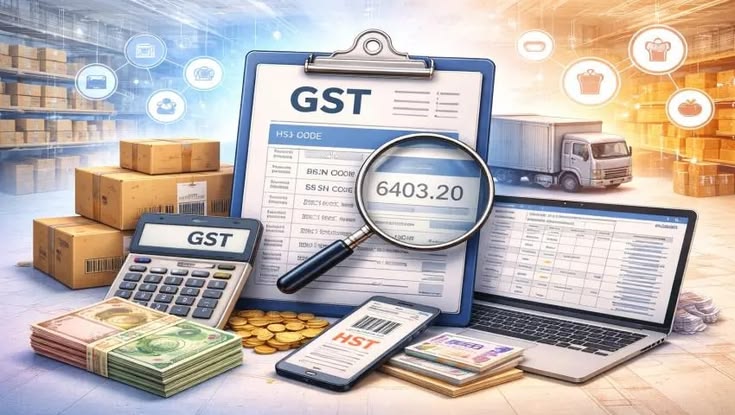
GST Compliance is an essential part of running a business in India. It involves meeting the requirements of the Goods and Services Tax (GST) framework, including registration, invoicing, return filing, tax payments, record maintenance, and responding to notices from the tax authorities. Businesses must understand their applicable obligations to avoid unnecessary errors, maintain accurate financial records, and support smooth day-to-day operations.
Whether a business operates as a proprietorship, partnership, limited liability partnership, private limited company, or another eligible entity, its GST obligations depend on factors such as turnover, business activities, location, type of supply, and registration status.
A well-planned GST Compliance process helps businesses maintain transparency, monitor tax liabilities, manage input tax credit, and reduce the risk of penalties arising from non-compliance. Professional guidance can also help business owners understand changing requirements and establish a reliable system for meeting applicable deadlines.
What Is GST Compliance?
GST Compliance refers to following the rules, procedures, and reporting requirements prescribed under India’s GST laws. It includes correctly reporting taxable transactions, issuing appropriate tax invoices, filing applicable GST returns, paying taxes within the prescribed timelines, and maintaining supporting documents.
Compliance requirements may differ between regular taxpayers, composition taxpayers, input service distributors, e-commerce operators, and other categories. Businesses involved in interstate supplies, exports, imports, or multiple registrations may also face additional reporting responsibilities.
GST Compliance is not limited to filing returns. It requires consistency between accounting records, sales invoices, purchase documents, GST returns, tax payments, and other relevant financial information.
Importance of GST Compliance for Businesses
1. Helps Meet Legal Obligations
Registered businesses must fulfil the GST requirements applicable to their registration category and transactions. Timely filing and payment help businesses meet their statutory responsibilities and reduce the likelihood of avoidable compliance issues.
2. Supports Accurate Financial Records
Maintaining proper invoices, purchase records, sales registers, credit notes, debit notes, and payment details improves the accuracy of business accounts. Reliable records also make financial reviews and audits more efficient.
3. Helps Manage Input Tax Credit
Eligible registered taxpayers may claim input tax credit (ITC) subject to the applicable legal conditions and documentation requirements. Reconciliation of purchase records with relevant GST statements can help identify discrepancies that require investigation before a claim is made.
4. Reduces Errors and Disputes
Incorrect tax rates, invoice details, tax classifications, or return entries can create discrepancies. A structured review process helps identify such issues before filing and supports timely corrections where legally permitted.
5. Improves Business Credibility
Consistent tax reporting and organised financial documentation can support relationships with suppliers, customers, lenders, and other business stakeholders. GST Compliance also helps businesses prepare for due diligence and financial assessments.
Key Areas of GST Compliance
GST Registration
Businesses must assess whether GST registration is required under the applicable provisions. Registration requirements can depend on turnover thresholds, the nature of supplies, the state or union territory of operation, and specific statutory conditions.
Some businesses may qualify for voluntary registration, while certain categories may be required to register under particular circumstances. Businesses should evaluate their position carefully rather than relying only on turnover.
GST Invoice Management
Tax invoices and other relevant documents must contain the particulars required under the applicable GST rules. These may include supplier and recipient details, GSTINs where applicable, invoice number and date, description of goods or services, taxable value, tax rate, and tax amount.
Businesses should also understand when a bill of supply, debit note, credit note, or other prescribed document is appropriate.
GST Return Filing
GST return filing involves reporting relevant business transactions, tax liabilities, eligible input tax credit, and other prescribed information through the GST system.
Depending on the taxpayer category and applicable requirements, returns and statements may include GSTR-1, GSTR-3B, GSTR-4, GSTR-9, or other forms. Not every form applies to every taxpayer, and filing frequency can differ according to the relevant scheme and eligibility.
Businesses should verify the current filing calendar and applicable form requirements before submitting returns.
GST Tax Payments
Taxpayers must calculate their GST liability correctly and pay the amount due within the applicable statutory timeline. This may involve reviewing output tax, eligible input tax credit, reverse charge liability, and the available electronic cash and credit ledger balances.
Accurate payment reconciliation helps identify outstanding liabilities and reduces the risk of errors in tax accounting.
Input Tax Credit Reconciliation
Input tax credit can affect a business’s working capital and overall tax position. Businesses should review purchase invoices, supplier information, relevant GST statements, and the statutory conditions governing ITC eligibility.
Differences between books of accounts and GST records should be investigated. A credit should not be claimed merely because an invoice appears in an accounting system; the applicable legal conditions must also be satisfied.
GST Annual Returns and Reconciliation
Certain registered taxpayers may be required to file annual returns or other prescribed reconciliation statements, subject to applicable exemptions and thresholds.
Annual compliance involves reviewing turnover, tax payments, input tax credit, adjustments, and information reported during the financial year. A careful review can help identify inconsistencies before the relevant filing deadline.
Common GST Compliance Challenges
Businesses may encounter several issues while managing GST obligations.
Incorrect invoice details: Errors in GSTINs, invoice numbers, tax rates, or taxable values may create reporting discrepancies.
Mismatch between books and returns: Sales, purchases, credit notes, and tax payments may not match the figures reported through the GST portal.
Input tax credit errors: Ineligible claims, missing documentation, or unresolved supplier-related discrepancies may affect the taxpayer’s credit position.
Missed deadlines: Failure to monitor applicable filing and payment dates can result in interest, late fees, or other consequences under the law.
Incorrect tax classification: Applying the wrong HSN or SAC classification, tax rate, place-of-supply treatment, or reverse charge provision can lead to incorrect tax reporting.
Poor document management: Missing invoices, incomplete records, and unorganised reconciliations can make compliance reviews difficult.
Ignoring notices: Delayed or incomplete responses to notices and communications from tax authorities can increase the risk of further proceedings.
A documented compliance workflow, periodic reconciliations, and timely professional review can help businesses manage these challenges more effectively.
GST Compliance Services
Professional GST Compliance services can help businesses manage routine tax responsibilities and address more complex reporting matters.
GST Registration and Amendments
Assistance may include assessing registration requirements, preparing documentation, submitting applications, and updating registration details when business circumstances change.
Monthly, Quarterly, and Other Applicable Return Filing
Support may cover the preparation and filing of applicable GST returns based on the taxpayer’s registration category, eligibility, and filing schedule.
GST Reconciliation
Reconciliation services compare accounting records with GST returns, invoices, relevant portal statements, and tax payment records. The objective is to identify differences and determine the appropriate corrective action.
Input Tax Credit Review
A review can help assess ITC documentation, identify potential mismatches, and check whether the relevant legal conditions have been met.
GST Notice and Assessment Support
Businesses may need assistance understanding notices, collecting supporting records, preparing explanations, and responding within the prescribed timeline. The appropriate response depends on the nature of the communication and the facts of the case.
GST Annual Compliance
Where applicable, assistance may include reviewing annual figures, reconciling returns, preparing required information, and supporting the filing of annual returns or prescribed reconciliation statements.
E-Invoicing and E-Way Bill Support
Eligible businesses may need to follow applicable e-invoicing and e-way bill requirements. Professional support can help review process requirements, documentation, and reporting procedures relevant to the business.
The applicability of these services depends on the taxpayer’s circumstances and current law.
GST Compliance for Different Types of Businesses
Small Businesses and Startups
Smaller businesses benefit from establishing correct invoicing, bookkeeping, registration assessment, and filing routines from the beginning. A clear process helps business owners monitor tax obligations without disrupting regular operations.
E-Commerce Businesses
E-commerce businesses may need to consider platform-related transactions, sales across different locations, returns, refunds, and any special GST provisions applicable to their activities. Their obligations depend on the business model and relevant statutory requirements.
Service Providers
Consultants, agencies, professional firms, and other service providers should review the applicable tax treatment, place-of-supply rules, invoice requirements, and registration obligations for their transactions.
Manufacturers and Traders
Manufacturers and traders may need to manage inventory records, purchase and sales invoices, input tax credit, goods classification, and e-way bill requirements where applicable.
Companies and LLPs
Companies and LLPs should coordinate GST reporting with their accounting and financial reporting processes. Multiple branches or registrations may require additional attention to transaction classification, inter-registration supplies, and reconciliation.
Best Practices for Effective GST Compliance
Businesses can improve their compliance process through the following practices:
- Maintain organised records: Keep sales invoices, purchase invoices, credit notes, debit notes, payment proofs, and other relevant documents properly classified.
- Use a compliance calendar: Track the deadlines applicable to each registration and return type.
- Reconcile regularly: Compare books of accounts with GST returns and relevant portal data instead of waiting until year-end.
- Review ITC eligibility: Check supporting documents and applicable legal conditions before claiming input tax credit.
- Verify tax treatment: Review tax rates, HSN or SAC classification, place of supply, and reverse charge applicability where relevant.
- Monitor GST portal communications: Check notices, filing status, ledger balances, and other relevant updates.
- Document corrections: Maintain records of adjustments and the reasons behind them.
- Seek professional advice when needed: Obtain qualified assistance for complex transactions, notices, disputes, or changes in law.
These practices should be adapted to the size, nature, and complexity of the business.
Consequences of GST Non-Compliance
Failure to meet applicable GST requirements can result in late fees, interest, penalties, demands, restrictions, or other statutory consequences, depending on the nature of the default and the relevant provisions.
Incorrect returns or unsupported input tax credit claims may also require correction and additional documentation. In serious cases, proceedings may arise under the applicable GST laws.
The consequences are not identical for every mistake. They depend on the facts, the type of non-compliance, the applicable statutory provisions, and any available correction or relief mechanism. Businesses should therefore address discrepancies promptly and avoid assuming that every error automatically attracts the same penalty.
How Professional GST Compliance Support Adds Value
Professional support can help businesses interpret applicable requirements, organise records, review tax calculations, manage return filing, and identify discrepancies before they become more difficult to resolve.
It can also help business owners understand their responsibilities without having to manage every technical detail independently. For businesses with multiple registrations, complex transactions, or limited internal accounting resources, a structured compliance process can improve coordination and reporting discipline.
However, engaging a service provider does not automatically transfer every statutory responsibility away from the taxpayer. Businesses should provide accurate information, retain supporting records, review important filings, and ensure that their compliance arrangements remain appropriate for their activities.
Frequently Asked Questions (FAQs)
1. What is GST Compliance?
GST Compliance means fulfilling the applicable requirements under India’s GST framework, including registration where required, invoicing, return filing, tax payments, record maintenance, and other prescribed obligations.
2. Who needs to follow GST Compliance requirements?
GST-registered taxpayers must meet the requirements applicable to their registration category and business activities. Businesses that are not registered should also assess whether registration is required under the law.
3. Which GST returns must a business file?
The required returns depend on the taxpayer’s category, registration status, scheme, and applicable filing requirements. Common forms include GSTR-1 and GSTR-3B for many regular taxpayers, while other forms apply in specific circumstances.
4. Why is GST reconciliation important?
Reconciliation helps identify differences between accounting records, invoices, GST returns, relevant portal statements, and tax payments. It supports more accurate reporting and helps businesses investigate potential ITC or liability discrepancies.
5. Can GST returns be corrected after filing?
Correction options depend on the return type, the nature of the error, the applicable statutory provisions, and the permitted time limits. Businesses should review the available correction mechanism promptly rather than assuming every filed detail can be freely amended.
6. What documents are needed for GST Compliance?
Common records include sales and purchase invoices, credit notes, debit notes, accounting ledgers, GST registration details, tax payment records, and relevant transaction documents. Additional documents may be required depending on the business and the transaction.
7. What happens if a GST return is filed late?
Late filing may result in late fees, interest, or other consequences under applicable provisions. The amount and treatment depend on the relevant return, delay, liability, and current rules.
8. How can a business improve GST Compliance?
Businesses can improve compliance by maintaining accurate records, following a filing calendar, reconciling transactions regularly, reviewing ITC eligibility, monitoring GST portal communications, and seeking professional advice for complex matters.
Conclusion
GST Compliance is an important responsibility for businesses operating in India. Effective compliance requires more than submitting returns; it involves accurate documentation, appropriate tax treatment, timely payments, input tax credit review, and consistent reconciliation of financial information.
By establishing a structured compliance process and obtaining professional guidance when necessary, businesses can improve reporting accuracy, manage tax obligations, and reduce avoidable compliance risks. The right approach should reflect the business’s size, activities, registration category, and applicable legal requirements.
For reliable GST Compliance support, businesses should work with qualified professionals who can assess their specific circumstances, explain relevant obligations, and help maintain an organised approach to GST reporting.